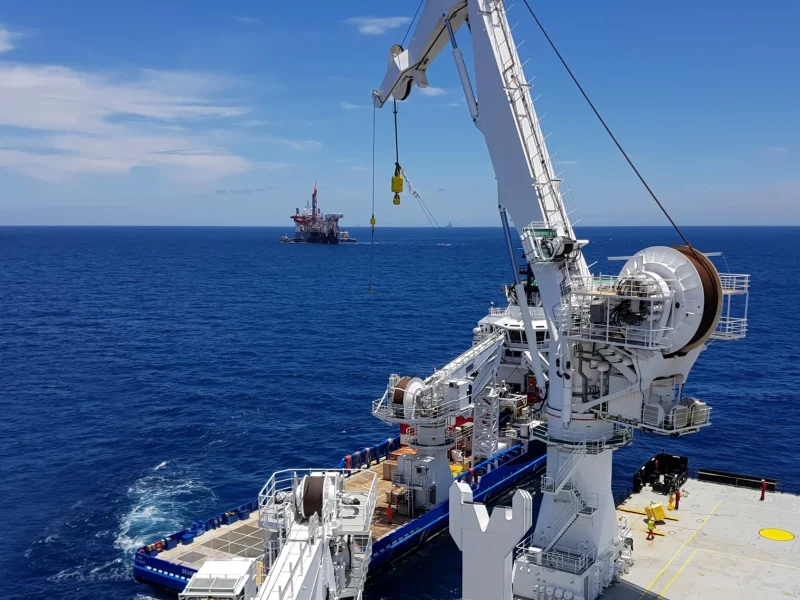
A sheave is often the most understated component that carries the heaviest burdens. While colossal cranes, sprawling offshore platforms, and towering wind turbines capture the imagination, their functionality relies on this fundamental mechanical component.
In the context of mechanical engineering and heavy fabrication, a sheave is a masterpiece of precision, designed to redirect force, manage immense tension, and ensure that multi-million-pound assets move safely and efficiently. At WD Close & Sons, we understand that the integrity of a global supply chain or a North Sea energy project can often hinge on the quality of a single sheave.
Why sheaves are essential in mechanical systems
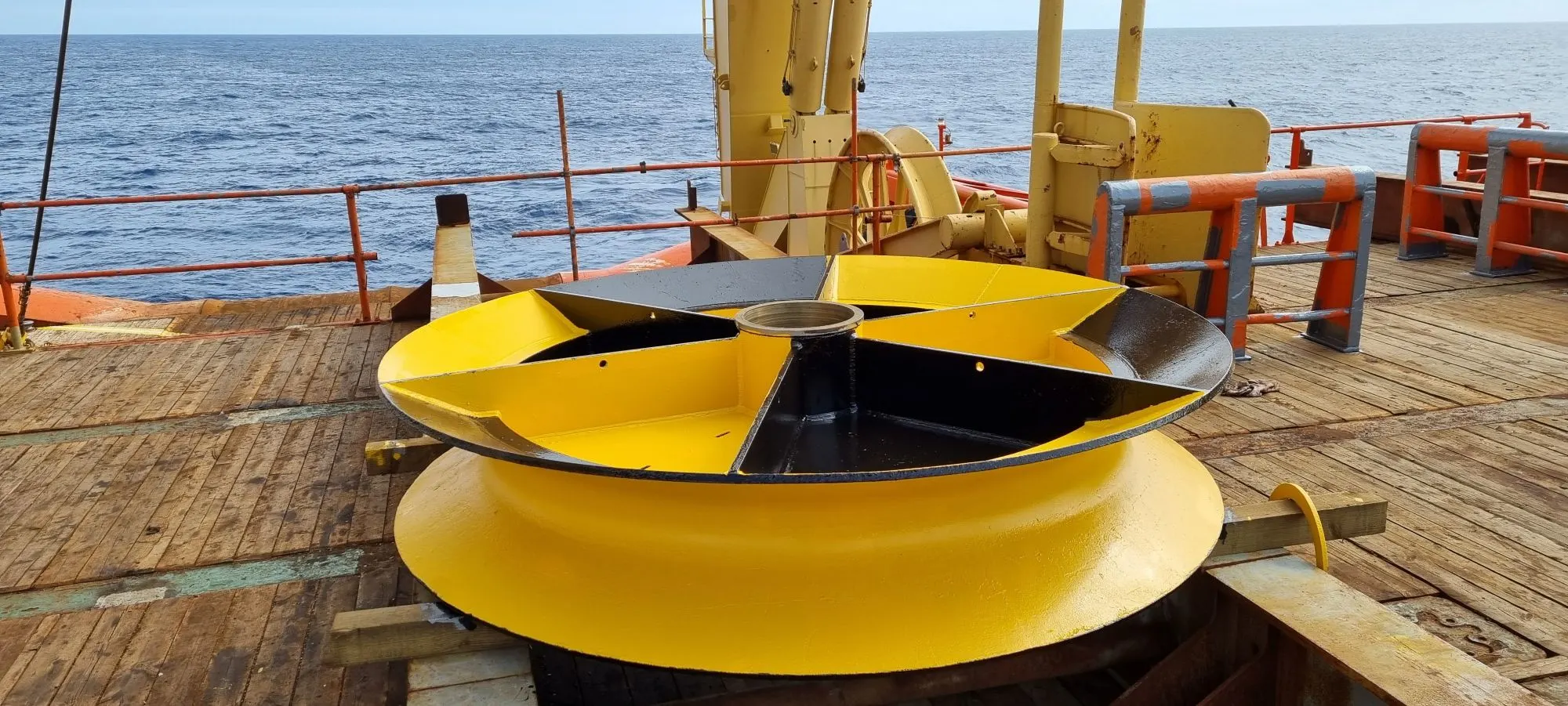
At its core, a sheave is a pulley wheel with a grooved rim, designed to hold a wire rope, cable, or belt. But its role in a mechanical system is far more complex than just holding a rope.
1. Reduction of friction and wear
The primary enemy of any lifting or hauling system is friction. Without a sheave, a cable being pulled over a stationary surface would generate immense heat and abrasive wear, leading to rapid rope failure. A well-engineered sheave rotates with the rope, converting sliding friction into rolling friction. This extends the lifespan of expensive wire ropes and reduces the energy required to move a load.
2. Load distribution and mechanical advantage
Sheaves are rarely used in isolation. By arranging them into blocks, engineers can create a block-and-tackle system that provides mechanical advantage. The physics is straightforward but powerful. By increasing the number of rope parts supporting a load through multiple sheaves, the force required to lift that load is divided. This enables relatively small motors or manual winches to lift weights that would otherwise be impossible to manage.
3. Handling dynamic and heavy loads
In heavy industrial environments, loads are rarely static. Factors like wind gusts on a construction site or the heave of the sea in offshore operations introduce dynamic forces. A precision-engineered sheave acts as a stabiliser, distributing these fluctuating tensions evenly across the cable and the support structure, preventing catastrophic snaps or structural buckling.
Key sectors where sheaves are essential
The versatility of the sheave makes it indispensable across diverse and demanding industries. Each sector presents unique challenges that require specific engineering approaches.
Marine and offshore engineering
In the North Sea and beyond, sheaves act as the critical interface between power and payload and are the structural backbone of all maritime hauling operations. Whether it’s deploying a Remotely Operated Vehicle (ROV) or managing an anchor handling system, the sheave must withstand constant exposure to saltwater. Our marine ancillary fabrication project demonstrates the use of a sheave in a frame and carriage fit out.
Renewables and wind energy
As wind turbines grow in size, the equipment used to build them must evolve. Huge sheaves are used in the specialised vessels that install turbine jackets and blades. In this sector, efficiency is key; a sheave that reduces drag helps maintain the tight schedules required for offshore wind farm development.
Defence and heavy manufacturing
In defence, sheaves are used in everything from elevator systems on aircraft carriers to specialised recovery vehicles.
Design and engineering considerations for sheaves
Designing a sheave is not a one-size-fits-all process. It requires a deep understanding of material science and physics.
Material selection
The choice of material depends entirely on the environment.
- Carbon steel: The standard for most heavy-duty applications due to its strength.
- Manganese steel: Often used for its work-hardening properties; the more the rope rubs against it, the harder the surface becomes.
- Nylon/polymers: Increasingly popular in lighter-duty environments where weight reduction and rope preservation are prioritised.
The importance of groove profiles
The groove of a sheave is its most critical feature. If the groove is too narrow, it will pinch and deform the rope. If it is too wide, the rope will flatten under load, leading to failure.
Environmental factors
Temperature affects the viscosity of the bearing lubricants and the ductility of the metal itself. Engineering for low-temperature environments requires specialised steel grades that won’t become brittle and shatter under impact.
The role of bespoke sheaves in complex projects
While you can buy standard sheaves from a catalogue, they are often insufficient for heavy engineering. This is where bespoke fabrication becomes a necessity rather than a luxury.
1. Tailored performance
Standard sheaves are built for average conditions. If your project involves non-standard rope diameters, extreme heat, or restricted spatial envelopes, a standard component will fail prematurely. A bespoke sheave is designed around the specific stresses of the project, ensuring that every millimetre of the component is optimised for the task at hand.
2. Longevity and cost-effectiveness
While a custom-fabricated sheave may have a higher upfront cost, by matching the sheave material and groove hardness exactly to the wire rope being used, you reduce the frequency of rope replacements, which, in large-scale operations, can save tens of thousands of pounds in maintenance and downtime.
3. Integration with complex systems
In many of the projects we handle here, the sheave is part of a much larger, complex assembly, such as a custom winch or a subsea deployment frame. Bespoke fabrication allows for the integration of specific bearing housings, seals, and mounting points.
How WD Close supports sheave fabrication
At WD Close & Sons, we provide engineered solutions for some of the most demanding environments. Our approach to sheave fabrication is rooted in decades of experience in heavy fabrication and precision engineering.
Precision engineering and fabrication quality
Our facility is equipped to handle the entire lifecycle of a sheave. From the initial design and stress analysis to the final machining and assembly, we maintain total control over quality. In sectors like oil & gas or defence, our fabrication process ensures that every sheave meets the strict tolerances required for smooth operation.
Collaborative project delivery
We act as a strategic partner, leveraging over 40 years of engineering heritage to solve the industry’s most complex mechanical challenges. We pride ourselves on working with our clients, moving beyond the role of a standard fabricator to provide a proactive, turnkey service.
Utilising our extensive in-house capabilities, from high-precision CNC machining to specialised welding under our 1,000+ approved weld procedures, we design and manufacture bespoke sheaves. Because we control the entire lifecycle of the project, including assembly and testing in our fabrication halls, we ensure the highest levels of quality. Finally, with our 180m private quay at the Carville Port facility, we can facilitate direct loadouts onto vessels, ensuring that even the largest, most complex sheave assemblies are delivered directly to the North Sea or global offshore projects with zero logistical friction.
Proven track record
With our extensive history in the Wallsend area and our work across the UK’s industrial landscape, we have the infrastructure to manage large-scale sheave production alongside complex one-off pieces. Whether it’s a 2-metre diameter sheave for a marine winch or a set of high-precision sheaves for a renewable energy project, we have the accreditations, machining capacity, and material expertise to deliver.
The sheave is a component that balances simplicity with extreme technical demand.
For companies operating in high-stakes environments, choosing the right partner for sheave fabrication is a critical decision.
Contact us today for support on your next project.